


What are the parts of a cone crusher?
 Mar 28, 2025|
 View:3473
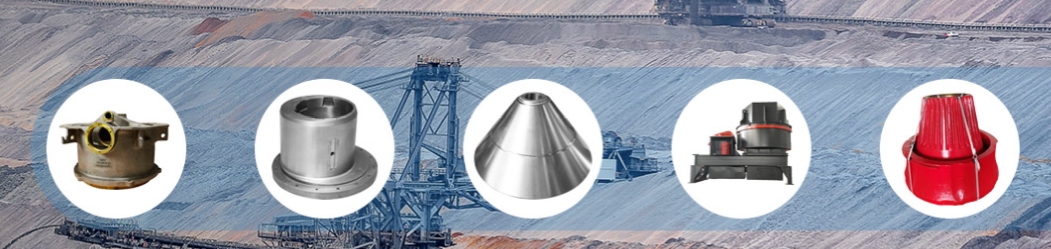
A cone crusher is a robust and highly efficient machine used for reducing various types of materials, such as rocks and ores, into smaller sizes. Understanding the parts of a cone crusher is essential for its proper operation, maintenance, and troubleshooting. Here is a detailed breakdown of the main cone crusher parts:
1. cone crusher parts-Crushing Chamber
The crushing chamber is the central part of the cone crusher where the actual crushing process takes place. It consists of the bowl liner (fixed outer cone) and the mantle (moving inner cone). The design and shape of the crushing chamber determine the size reduction ratio and overall performance.
2. cone crusher parts-Mantle
The mantle is a crucial component that performs the crushing action. It is made of wear-resistant materials and moves in a circular path to crush material against the concave. The mantle is subjected to high stress and wear, so it is often made from high manganese steel, chromium steel, or other durable materials. Regular inspection and replacement are necessary to maintain optimal performance.
3. cone crusher parts-Concave (Bowl Liner)
The concave, also known as the bowl liner, is the stationary outer cone that surrounds the mantle. It provides a surface against which the mantle crushes the material. Like the mantle, the concave is made from durable materials and is designed to withstand significant wear. The shape and depth of the concave affect the final product size and shape.
4. cone crusher parts-Liners
Liners are replaceable wearing parts fitted on both the mantle and the concave. They protect the main components from wear and need regular replacement to maintain optimal performance. Liners are available in various materials, including high manganese steel and composite materials, to suit different wear conditions.
5. cone crusher parts-Eccentric Assembly
The eccentric assembly is responsible for generating the gyratory motion of the mantle. It consists of an eccentric bushing, pinion shaft, and countershaft. The assembly rotates to cause the mantle's circular crushing motion. The eccentric bushing converts the smooth rotation of the main shaft into an offset motion that causes the mantle to gyrate.
6. cone crusher parts-Adjustment Ring (Bowl Adjustment Ring)
The adjustment ring controls the closed side setting (CSS) by adjusting the distance between the mantle and the bowl liner. This determines the size of the final product. Modern cone crushers often use hydraulic systems to adjust the CSS remotely, providing precise control and flexibility.
7. cone crusher parts-Main Shaft
The main shaft is a central component that supports the mantle and transfers power from the eccentric assembly. It must withstand significant torque loads and is typically made from high-strength alloy steel. Proper alignment and lubrication are crucial for its longevity.
8. cone crusher parts-Spider Cap
The spider cap is located at the top of the crusher and protects the spider bearing. It covers and seals the bearing to prevent contamination from dust and other debris.
9. cone crusher parts-Dust Seals
Dust seals are essential for maintaining a clean crushing environment. They prevent dust and fines from entering the crusher, which could otherwise impair performance and lead to premature wear of internal components. Effective dust control is critical for the operational efficiency of the cone crusher.
10. cone crusher parts-Hydraulic/Spring-Based Adjustment System
Hydraulic or spring-based systems enable the adjustment of the CSS. Hydraulic systems offer quick and precise adjustments and are safer than manual methods. They also provide safety features, such as tramp release systems, which automatically release uncrushable objects to prevent damage to the crusher.
11. cone crusher parts-Bearings
Bearings play a vital role in reducing friction and supporting the heavy loads encountered during crushing operations. Cone crushers commonly use roller bearings due to their ability to handle high loads and provide reliable performance. Regular lubrication and timely replacement of worn bearings are essential for maintaining efficiency and preventing unexpected failures.
12. cone crusher parts-Springs
Springs are used in the crusher mechanism for shock absorption, protecting the machine from damage caused by uncrushable materials and uneven loading. Different types of springs, such as coil springs and leaf springs, are used based on the specific design and operational requirements.
13. cone crusher parts-Transmission Shaft
The transmission shaft connects the main shaft to the eccentric assembly and is responsible for transferring power to drive the crushing process. It must be made from high-quality materials to withstand the significant forces involved.
14. cone crusher parts-Bevel Gear Assembly
The bevel gear assembly powers the main shaft and includes a large drive pinion gear and a ring gear. Proper alignment and lubrication of the gear set are crucial to avoid excessive noise and premature wear.
Importance of Maintenance
Regular maintenance is essential for maximizing the uptime and efficiency of a cone crusher. Key maintenance tasks include:
Inspection of Wear Parts: Regularly check the condition of liners, mantles, and concaves for wear and replace them as needed.
Lubrication: Ensure that all moving parts, including bearings and gears, are properly lubricated to reduce friction and prevent overheating.
Hydraulic System Checks: Monitor hydraulic fluid levels and pressure, and promptly address any leaks or contamination.
Seal Integrity: Inspect seals and gaskets for wear and replace them to prevent contamination.
Alignment Checks: Ensure proper alignment of the countershaft assembly and other critical components to minimize wear and maintain operational efficiency.
A cone crusher is a complex machine with many interdependent parts, each playing a crucial role in its operation. Understanding these components and their functions is essential for effective operation and maintenance. By regularly inspecting and maintaining these parts, operators can ensure the crusher's longevity, efficiency, and reliability, ultimately maximizing productivity and reducing downtime.